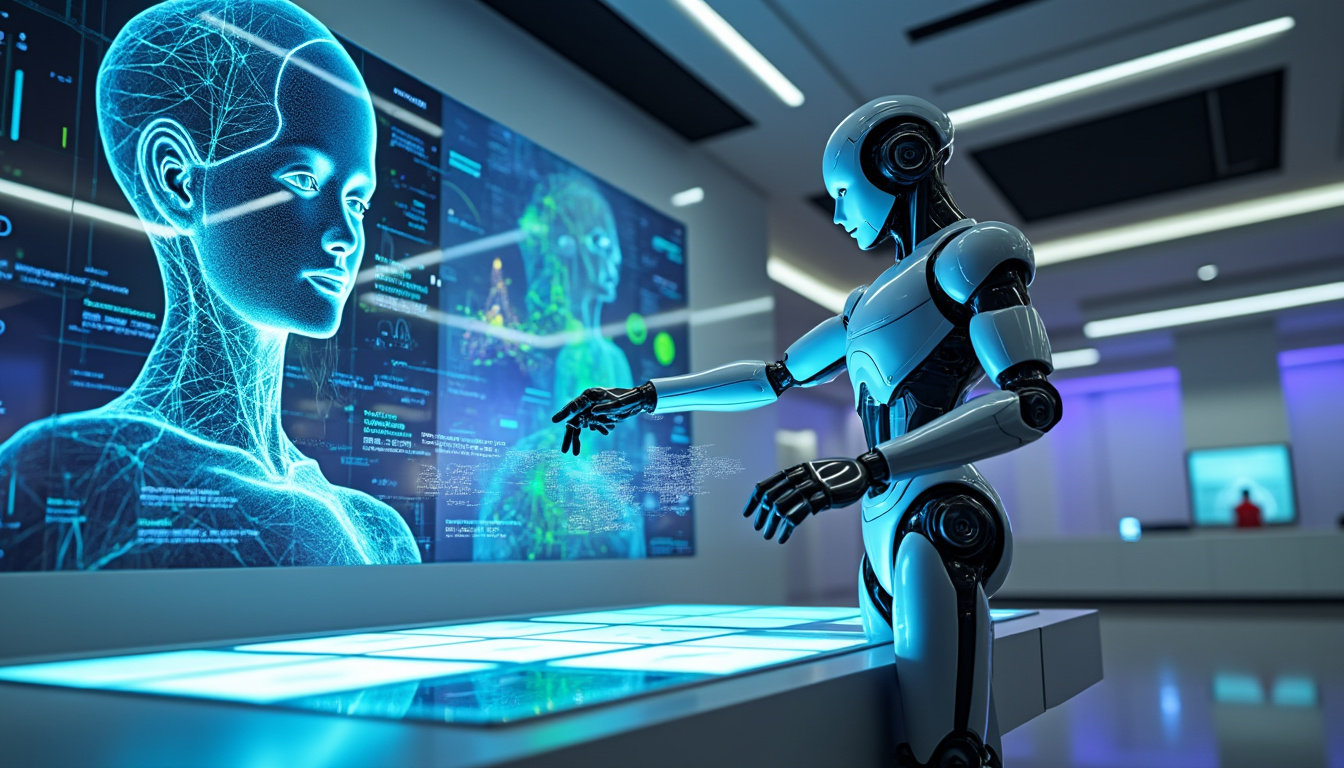
Artificial Intelligence According to Google: What Are Its Flagship AIs?
An Overview of Artificial Intelligence at Google
Over the years, Google has carefully integrated artificial intelligence into nearly all of its products and services, shaping our daily lives in remarkable ways. With technologies like Google Assistant, TensorFlow, DeepMind, and many others, Google demonstrates advanced mastery in the field of AI. This article explores the different facets of these technologies, how they work, their impact on users, and envisions the future of artificial intelligence according to Google. Understanding Artificial Intelligence and Its ComponentsArtificial intelligence (AI) is a rapidly growing field that focuses on creating systems capable of learning, reasoning, and acting autonomously. Subfields such as machine learning and deep learning play crucial roles in this technological revolution. This section will detail these concepts, their relevance, and how they are applied at Google. What is Artificial Intelligence? At the heart of AI is the ability of machines to process information and perform tasks that previously required human intervention. There are several types of AI, including:Weak AI : Designed to perform specific tasks.Strong AI
: Capable of performing cognitive tasks at the same level as humans.
Generative AI : Generates new ideas or content, as in the case of MusicLM. Machine Learning and Deep Learning Machine learning is a subset of AI that allows computers to learn without being explicitly programmed. Using algorithms, systems analyze large amounts of data to identify patterns and correlations. On the other hand, deep learningMachine learning, a subset of machine learning, uses neural networks to model complex data. This enables significant advances in areas such as image recognition, where a system can, for example, recognize a cat after analyzing thousands of images.
Practical Applications of Google’s Artificial Intelligence
Google has integrated its AI into various tools, bringing measurable improvements to our daily lives. Tools like
- Google Photos employ image recognition technologies, while
- Google Assistant offers intuitive voice interaction using natural language processing algorithms.
- Google’s Flagship AIs and Their Impact Google is developing several AI-powered products that are transforming not only how we interact with technology, but also how we perceive the world. This section will highlight some of the most influential technologies.
Google Assistant: Your Virtual Personal Assistant
Google Assistant is one of the most visible examples of AI being applied in our daily lives. By allowing users to ask questions by voice, create reminders, or manage a schedule, this virtual assistant embodies the convergence of ease of use and the power of AI. Google Assistant’s success is based on its ability to understand natural language, learn user preferences, and personalize interactions. Tesla: Locus of Innovation in Autonomous Driving Google’s advances in autonomous driving are illustrated by Waymo, which uses AI to safely navigate complex environments. These autonomous vehicles are equipped with sophisticated sensors and machine learning algorithms to recognize obstacles and adapt to traffic in real time. AI allows Waymo to gain a deep understanding of the environment thanks to hours of collected driving data.
TensorFlow and Google Cloud AI: Development Tools for Professionals
TensorFlow is an open-source framework provided by Google to help developers easily design and deploy AI models. Its flexibility and accessibility make it a preferred choice for researchers and companies looking to integrate artificial intelligence into their products. Additionally, Google Cloud AI offers robust solutions that allow companies to manage, deploy, and optimize their AI models at scale. AI Tool Description
Applications
Google Assistant
AI-powered virtual assistant, offering voice interactions
Calendar management, reminders, information retrieval Waymo
Autonomous vehicle using AI for navigation
Urban transportation, road safety TensorFlowDevelopment framework for creating AI models
Developing AI applications on various platforms
Ethical Issues and Implications of AI As AI continues to evolve, it is crucial to address the ethical issues that arise. This section will examine the challenges posed by the systematic use of artificial intelligence and how Google is working to navigate this complex environment. Ethical Concerns of AI Involvement Due to its capabilities, AI can also raise major concerns regarding privacy, security, and autonomous decision-making. AI systems must be transparent and accountable to minimize bias and ensure ethical use of data. As such, the movement toward ethical AI seeks to adopt the high standards that companies like Google are seeking to establish.
| The Responsibility of Transparent AI | It is essential that users understand how AI systems, such as those used by | Google Search AI |
|---|---|---|
| , operate and make decisions. By incorporating transparency mechanisms, Google is committed to promoting user trust and preventing technology misuse. The implications of these ethics efforts may define how AI will be perceived in the future. | AI and the Future of Work | The rise of AI is having significant repercussions on the job market. Automation threatens to replace some jobs, while new roles are emerging. To prepare workers for these changes, it is crucial to promote training in digital skills and AI. Projects such as those focused on automation highlight the importance of continuous professional development. |
| Future Prospects for Artificial Intelligence | As AI continues to evolve, Google’s technologies are preparing to shape an even more remarkable future. It could transform not only the technological landscape, but also society as a whole. Anticipating future developments in AI and its responsible integration remain key priorities. | Future Developments in Artificial Intelligence |
| With tools such as Dialogflow | With the advent of AI-powered technologies that enable the construction of conversational interfaces, the possibilities for creation and innovation are endless. Collaboration between humans and machines could reach new heights thanks to more accurate recognition systems and improved contextual responses. Generative AI, for example, will continue to enrich the fields of music, art, and design, opening up unprecedented creative horizons. | AI and Society: Towards an Interconnected Future |
The implications of AI are not limited to technological adjustments. Players like Mistral and other international companies are launching initiatives that could pave the way for a more inclusive digital future. How to govern these technologies, protect human rights, and erect barriers against abuse are crucial questions that must be addressed collectively to fully leverage the opportunities offered by AI.
Issues and Challenges to Overcome
The technical and ethical challenges that arise in the development of AI are numerous. The need to shape AI systems that are not only efficient but also fair and transparent is crucial. Organizations must engage in dialogue, conduct research, and establish regulations to define acceptable boundaries. Collaboration between companies and regulators will play a major role in defining the future horizons of AI.
Google’s continued innovations, particularly with tools like AutoML, which allow anyone to create personalized learning models, promise to make AI accessible to a wider audience. In conclusion, a thoughtful approach to AI development, combined with innovation, can lead to transformative results.
Catégories : Non classé
Tags :