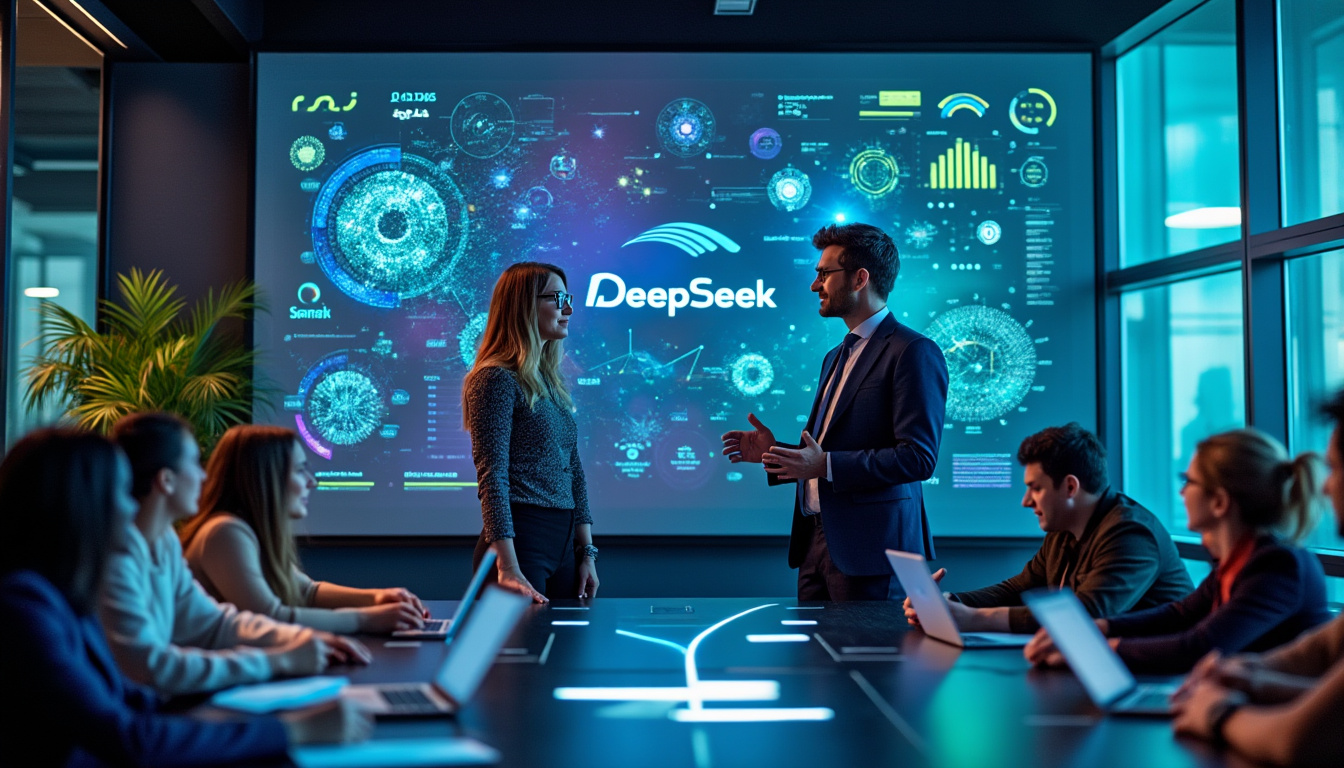
OpenAI unveils new feature for ChatGPT, boosted by competition from Deepseek
OpenAI, the global leader in artificial intelligence, is causing a stir with its recent announcement of a major innovation for its flagship tool, ChatGPT. Faced with the rise of Deepseek, a Chinese startup competing with powerful, low-cost technologies, the American company has decided to unveil a new “deep search” feature. This tool promises to transform the landscape of natural language processing while offering OpenAI users an even more efficient way to interact with AI. Through a strategic partnership with Softbank Japan, OpenAI is redefining the standards for automation and entrepreneurship in the rapidly evolving technology sector.
ChatGPT’s New Deep Search Feature
At a landmark event in Tokyo, OpenAI unveiled its latest technological advancement: a deep search tool integrated into ChatGPT. This innovation allows the user to give instructions to ChatGPT, which, in turn, is able to search, analyze, and synthesize hundreds of online sources in minutes. This system promises to perform tasks in record time that previously took human analysts hours. According to Sam Altman, CEO of OpenAI, this functionality is capable of covering a wide range of intellectual and decision-making tasks, thus boosting process automation in businesses.
How it works and practical applications
ChatGPT’s in-depth research is powered by advanced machine learning algorithms. Based on predictive models, AI can connect isolated data points, creating a comprehensive report on a given topic. This technology represents a significant advancement in natural language processing, crucial in fields such as academic research, market analysis, and even business strategy.
The applications of this feature are vast. For example, in the field of entrepreneurship, startups can use this tool to conduct market research or create business plans enriched with relevant data in record time. Furthermore, businesses can benefit from integrating this technology to optimize decision-making and resource management. Automating repetitive tasks with artificial intelligence also allows human efforts to be redirected toward more creative and innovative tasks. Background on the Competition between OpenAI and Deepseek
The competition between OpenAI and Deepseek is a key concern in the tech industry. Deepseek, with its low-cost solution, poses a significant threat to traditional business models based on artificial intelligence. The speed at which this startup is evolving has led OpenAI to intensify its efforts to stay at the forefront of innovation. The rivalry between American giants and emerging Chinese companies also raises questions about the safety and ethics of AI.
OpenAI has highlighted the fact that companies like Deepseek are attempting to replicate its technologies by using distillation processes, a knowledge transfer that conflicts with the company’s terms of use. In response, OpenAI prefers to focus its efforts on improving its products while monitoring developments in the technological landscape. Sam Altman has expressed concern about the potentially harmful use of AI by authoritarian governments, which emphasizes the importance of adequate regulation in this sector.
Market and User Impact
OpenAI’s push to improve ChatGPT with its new feature could have significant market repercussions. End users could benefit from a more powerful interface that facilitates access to information and optimizes their decision-making time. Furthermore, by making these tools accessible, OpenAI could conquer new market segments, particularly among Japanese companies looking to integrate artificial intelligence into their daily operations. Companies such as Nvidia and Samsung, which are also investing in AI-based technologies, could be influenced by this increased competition. The challenge is to remain relevant and competitive in a constantly evolving sector, where innovation is paramount. Strategic partnerships, such as the one between OpenAI and Softbank, could pave the way for new developments in the development of AI systems.
The challenges of innovation in artificial intelligence
In the dynamic field of artificial intelligence, the stakes are not limited to technological performance. Innovation must also address the ethical and social dimensions that arise from it. AI’s promise to transform the labor market and the way businesses operate requires careful consideration of its potential consequences. Integrating AI solutions into the economic system can lead to greater efficiency, but it can also trigger automation that threatens traditional jobs.
Risks and Opportunities for Businesses
Businesses must carefully navigate the risks and opportunities offered by AI. On the one hand, the ability to automate processes can reduce costs and increase productivity. On the other, there are risks arising from overreliance on artificial intelligence. The issue of data protection and privacy is more pressing than ever. Businesses must ensure they comply with privacy laws and that their AI systems are designed to avoid bias and discrimination. The challenge for business leaders is to find a balance between technological innovation, ethical values, and social responsibility. Collaborating with AI ethics experts can be an effective strategy for navigating these sometimes murky waters. Companies that successfully integrate ethical practices into their innovation will likely be better positioned to gain public and customer trust while remaining at the forefront of technology.
Future Outlook for AI and Automation
The future of artificial intelligence and automation is bright but uncertain. With the advances announced by OpenAI and other industry players, the integration of AI in diverse areas such as healthcare, education and customer service is already underway. Businesses must be prepared to quickly adapt to these developments to maximize benefits while overcoming potential challenges.
It is imperative that businesses and regulators work together to define a framework that supports innovation while safeguarding the public interest. International legislation on AI is necessary to standardize practices and improve security throughout technological evolution. Businesses that anticipate these changes and take a proactive approach will have an advantage over the competition.
Catégories : News & AI
Tags : artificial intelligence, chatgpt, deepseek, new feature, openai