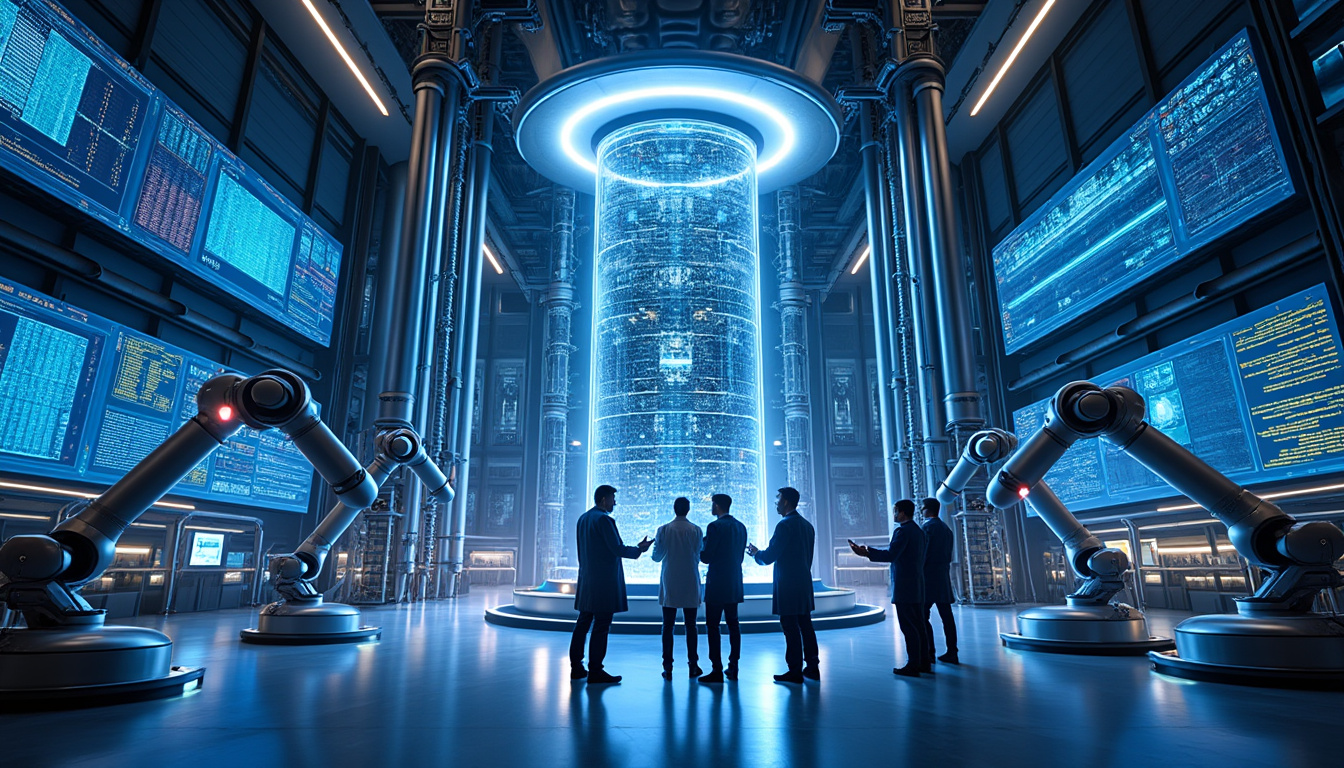
The Iter nuclear fusion project joins forces with Microsoft’s artificial intelligence
Nuclear fusion, long considered a scientific pipe dream, is now on the verge of becoming a reality thanks to technological advances. The ITER project, a symbol of humankind’s aspiration for sustainable and clean energy, is now drawing on the expertise of Microsoft, a major player in the field of artificial intelligence. Together, they are working to implement innovative solutions that could transform the way we produce energy. As the planet faces unprecedented environmental challenges, this collaboration could offer a glimmer of hope for a greener future. Understanding the ITER project and its implications for nuclear fusionThe ITER project, an acronym for International Thermonuclear Experimental Reactor, was launched with the ambition of demonstrating the feasibility of nuclear fusion as a viable energy source. This collaborative project involves contributions from several countries seeking to develop technology that replicates the energy processes of stars. In 2025, ITER will be poised to achieve key milestones in the field of research and sustainable development. The Fundamental Principles of Nuclear FusionNuclear fusion relies on the fusion of light atoms, such as hydrogen, to create helium, a process that releases a considerable amount of energy. Unlike nuclear fission, which involves splitting heavy nuclei, fusion is considered a safer and more environmentally friendly solution. Indeed, it generates little radioactive waste and presents a significantly lower risk of accidents. ITER’s goal is to ensure that this process can be controlled and operated efficiently.Recent advances in this field can be summarized in the following points:Magnetic Confinement Technology: Using magnetic fields to maintain plasma at extreme temperatures.Improving diagnostic systems
: Tools to monitor and analyze reactions in the reactor.
International collaboration : Partnerships between researchers and engineers from around the world, strengthening the exchange of know-how.The role of artificial intelligence in nuclear fusion In this quest for fusion, artificial intelligence is positioning itself as an essential asset. The systems developed by Microsoft are capable of processing enormous amounts of data in real time, thus optimizing research processes. Thanks to machine learning algorithms, these technologies can analyze reactor performance, predict plasma behavior, and propose adjustments in real time. The challenges of the collaboration between ITER and Microsoft The collaboration between ITER and Microsoft represents a crucial turning point in the quest for clean energy. Together, they intend to develop solutions that will foster innovation in the field of nuclear fusion. To better understand this synergy, it is useful to explore the main challenges of this partnership.Accelerating research through technological innovation
Developing a nuclear fusion energy source is not only a matter of science, but also of technological innovation. Microsoft, through its AI capabilities, is bringing a new dimension to ITER’s research. Together, they are working on tools such as:
Advanced Simulations
: Modeling of reactor conditions, allowing for the anticipation of challenges.
- Predictive Analytics : Using historical data to predict future reactor behavior.
- Fusion Control Optimization : Real-time adjustments to maintain stable plasma.
- Empowering Human Capacity through Artificial Intelligence Beyond the technical aspect, this collaboration also aims to strengthen the skills of the scientists and engineers involved in the project. By integrating intelligent tools, teams can benefit from an enhanced learning experience, focusing on creative work rather than routine or repetitive tasks. This helps accelerate the innovations needed for fusion.
Impacts on Sustainable Development and Tomorrow’s Energy
The convergence of ITER and Microsoft’s artificial intelligence is not limited to technical improvements. The implications are far-reaching and directly affect our energy future. In 2025, a major challenge will be to assess these impacts.Harnessing Clean and Inexhaustible Energy One of the most promising advantages of nuclear fusion is its potential to provide a significant source of energy without the negative impacts of traditional energy sources. Considering the current progress of the ITER project, here are some key benefits: Significant reduction in CO2 emissions : A key contribution to the fight against climate change.
Minimization of nuclear waste
: Fusion generates less waste in the long term than fission. Access to inexhaustible energy : Engineering an element derived from seawater, making fusion a virtually unlimited resource. Fostering innovation and the green economy The innovation generated by this alliance could propel new sectors of activity, thus fostering a green economy. In 2025, unprecedented opportunities could emerge thanks to advances in energy technology, strengthening the position of leaders in the global market. This could include:
Creation of sustainable jobs
: Research, engineering, and technology units.Public-Private Partnerships : Collaboration between governments and businesses to develop new energy infrastructure.Investment in Education: Specialized training to prepare the future workforce.
- Challenges to Achieve Affordable Nuclear Fusion Despite these promising prospects, the road to commercially viable nuclear fusion is fraught with challenges. Technical, economic, and political obstacles must be overcome to truly realize ITER’s potential.
- Technical Obstacles and Complex Engineering Technical challenges are among the most pressing. ITER researchers face rigorous engineering requirements, such as:
- Temperature Management : Achieving and maintaining temperatures higher than those of the sun.
Effective Containment
: Establishing a sufficiently strong magnetic field.
Power Management System
: Optimal recovery and distribution of the generated energy. Economic and Political Challenges
On the economic front, the cost of the project remains high and requires substantial investment from governments and private companies. Furthermore, political issues may hamper the progress of nuclear fusion initiatives, which require long-term support. Therefore, the regulatory framework will need to be adjusted to foster innovation and adoption of these technologies.
Type of Challenge DescriptionPotential Solutions
- Technical Achieving Extreme Temperatures and Pressures
- Innovations in Engineering and Materials Economic
- High Development Costs Public-Private Partnerships, Financing
Political
Regulatory Restrictions Awareness and AdvocacyFaced with these challenges, it is crucial to foster dialogue between researchers, companies, and governments to build a future where nuclear fusion contributes to global energy resilience.
Catégories : Non classé
Tags : artificial intelligence, iter project, iterate, microsoft, nuclear fusion