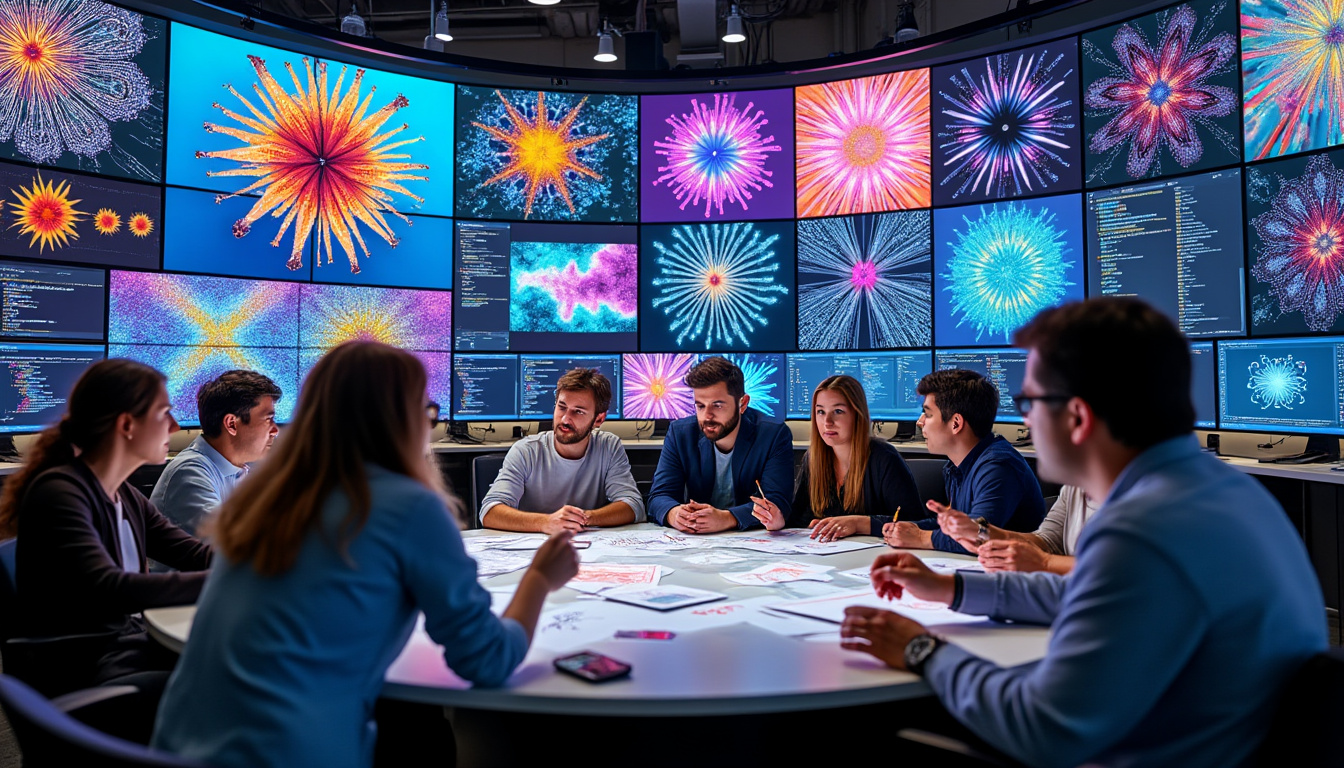
What are the reasons why images produced by artificial intelligence look so similar?
In the fascinating world of artificial intelligence, image generators such as DALL-E, Midjourney, and DeepArt fascinate with their ability to create stunning visuals. Yet, despite their impressive technological advances, these images often share very similar characteristics. Why then do these creations appear so similar? This article explores the mechanisms underlying this visual uniformity and the implications of this trend.
The Foundations of AI Image Creation
To understand why AI-generated images tend to look so similar, it is essential to examine the training process of these systems. Models such as those developed by OpenAI, NVIDIA, and others use massive datasets to fine-tune their capabilities. These images range from realistic photos to stylized illustrations, but certain visual constants inevitably emerge. Training on diverse datasets: AIs are often trained on millions or even billions of images from various sources, resulting in a dark and sleek visual style.Impact of composition: AI systems tend to replicate popular aesthetic trends, reflecting contemporary tastes and visual standards. Appeal and marketing:
- The most appealing images are often those that are simplified and idealized, resulting in a reduction in diversity in the results generated. Training data biases
- Bias present in datasets play a crucial role in this uniformity. When AIs like Midjourney or Runway If AI systems train on samples that don’t include sufficient diversity, this inevitably affects the results. For example, if the majority of training images are cartoon-style portraits, the AI will tend to produce more portraits with these characteristics, neglecting other artistic forms.
- These biases can manifest themselves in several ways: Generated faces can often appear disproportionately large.
Backgrounds can be overlooked or simplified, creating dissonance in the spatial perception of images.
Lack of diversity can result in stereotypical or biased cultural representations. The Technology Behind Generative AI Delving a little more into the technology, there are several algorithms that power these image generators. For example, DeepDream and Generative Adversarial Network (GAN) techniques can create stunning visual effects, but this also poses challenges for originality. The very architecture of these systems often favors the combination of familiar visual styles, which contributes to consistent results. Here are some of the key technologies to know: Technology
Description
- Use
- GAN
- A type of neural network that pits two models against each other to improve the quality of generated images.
Creates realistic or stylized images.
Transfer Learning Using a pre-trained model to facilitate learning on a new dataset. Accelerates the training process.
Convolutional Networks
| Neural networks specialized in processing structured data such as images. | Pattern detection and feature extractors. | The influence of artistic styles on image generation. |
|---|---|---|
| Comparisons between images generated by different AIs often reveal that certain artistic styles tend to dominate. For example, visuals that mimic more cartoonish or abstract styles are frequently used in results created by tools like Canva and DeepArt. These choices are based on algorithms that value visual simplicity and immediacy. | Contemporary Aesthetic Trends | AI products are influenced not only by datasets, but also by aesthetic trends that are in vogue at a given moment. In 2025, a lack of diverse inspiration can lead to images that appear stagnant. So, how do these trends manifest themselves in creations? |
| Minimalist and clean images are in high demand, which greatly affects AI creations. | Works inspired by pastel or soft styles continue to reign, often on platforms like Instagram. Photorealistic representations are gaining popularity, but require careful tuning to avoid visual tics. | Comparison between different image generators |
| To illustrate these similarities in image production, here is a comparison chart of the image output from different generators: | Generator | Visual Style |
Main Features
DALL-E Fantasy Realism Creation of surreal scenes, races of imaginary creatures. MidjourneyAbstract Futurism
Highly stylized images, often with saturated color palettes.
DeepArt
- Modern Painting
- Reinterpretation of classics in contemporary styles.
- The Ethical Issues of Visual Homogeneity
Faced with the rise of this visual homogeneity, ethical questions arise. If AIs create images that tend to resemble each other, what are the consequences for artists and human creativity? The risks of such uniformity are very real, particularly with regard to copyright and the protection of the original work.
Impact on Human Creativity
| Artists may feel increased pressure due to the homogeneity of AI creations. The lack of originality can lead to a dilution of human creativity, prompting reflections on: | The potential impact on emerging artists trying to stand out in a sea of similar images. | The issue of copyright, when the originality of creations is questioned. |
|---|---|---|
| A change in the perception of “art” in the digital age, where the value of AI-generated pieces may be contested. | Possible Solutions | To avoid this uniformity, several approaches could be considered. This involves improving the diversity of training datasets, particularly through collaboration with human artists. Here are some ideas to explore: |
| Incorporate more diverse datasets to enrich the training database. | Encourage collaborations between artists and AI developers to create new art forms. | Promote ethical practices in the use of AI systems, while preserving the rights of creators. |
| Open Conclusion // Article Structure | In short, images produced by artificial intelligence are becoming increasingly similar due to training on biased datasets, aesthetic choices, and technological trends. This raises crucial questions about the place of human art in a world of automated creation. However, these challenges can also offer an opportunity to rethink and redefine art in the age of AI, if we are innovative and ethical. |
Catégories : Non classé
Tags :