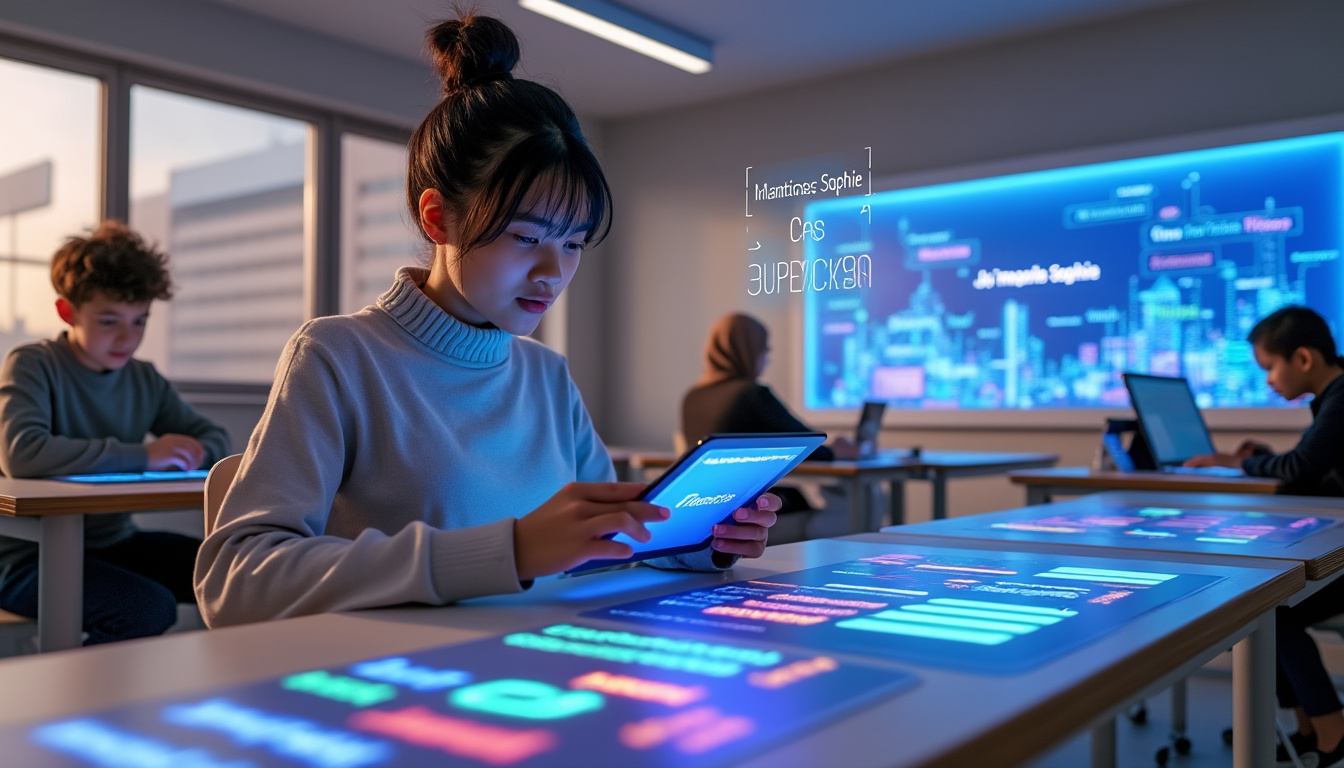
Duolingo Gets Up to Date with AI: Is This the End of Human Translators?
The rapid development of artificial intelligence (AI) is transforming the face of many industries, and the language education sector is no exception to this trend. In 2024, the famous language course application, Duolingo, announced that it was gradually replacing its human translators with AI systems. This movement raises questions about the future of language learning and the place of professionals in an increasingly automated world.
Duolingo in the AI era: a turning point
On October 23, 2024, a Zoom meeting marked a turning point for around 200 self-employed workers from Duolingo. During this interaction, HR announced that human translators would be replaced by AI algorithms, a change that caused concern among service providers. CEO Luis von Ahn only officially confirmed this strategy about six months later.
This movement is all the more significant because in 2024, Duolingo generated an impressive $748 million in revenue. The pressure to innovate and reduce operating costs is therefore palpable, leading the company to turn to improving its AI infrastructures to compete with other applications like Babbel And Rosetta Stone.
Evolution of translation: from human to machine
Translation has always been a deeply human activity, bridging cultures and interpreting the subtleties of languages. However, with the rise of technologies such as Google Translate And DeepL, AI is becoming more precise and starting to stand up to human translators. Language companies such as Busuu And Lingvist are also exploring similar tools to optimize their service.
Here are some reasons raised by proponents of AI in translation:
- Efficiency : AI systems can process huge volumes of text in record time.
- Cost: Reduced human labor costs.
- Accessibility: The development of online tools makes translation instantly available to a wide audience.
Despite these advantages, concerns persist about the quality of machine translation. Cultural and contextual nuances can be lost, raising questions about the accuracy of translations produced by algorithms.
Stories from upset users
John, a freelance translator working with Duolingo, shared his experience following this announcement. His story illustrates the growing discontent with this technological revolution. “We were presented with a fait accompli,” he says. “Management simply informed us that our role would disappear.” This situation is not isolated, and many service providers feel insecure about the rise of AI. There are other language learning platforms that also rely on human translators to ensure the quality of their content, such as Memrise, HelloTalk, and Tandem. Their success relies in part on the ability of human intervention, raising doubts about the sustainability of a fully automated model.
Alternatives to Duolingo: A Changing Linguistic Landscape While Duolingo grabs the headlines, there are a range of other language apps that take different approaches to language learning. Some of them, such as Pimsleur and Clozemaster, maintain a balance between human intervention and technological support. Users are turning to these alternatives to preserve the human element in language education.Comparing Language Learning Apps App Learning Model Use of AIHuman Interaction
Duolingo
Educational Games Yes Limited Babbel Structured Lessons NoHigh
Busuu
| Interaction with Native Speakers | Yes | High | Lingvist |
|---|---|---|---|
| Personalized Flashcards | Yes | Limited | Memrise |
| Original Video Database | No | High | HelloTalk |
| Messaging with Native Speakers | No | High | Tandem |
| Language Exchanges | No | High | Pimsleur |
| Active Listening | No | Limited | Clozemaster |
| Context Exercises with Text | Yes | Limited | The Human Perspective in an Automated World |
| Beyond the fundamental debates on the use of AI, the human element remains essential in language learning. Cultural experiences, emotional exchange, and contextual understanding are aspects that cannot be easily replicated by algorithms. Users often seek platforms that allow them to interact with people, such as Busuu or Tandem, which create opportunities for authentic conversation. | A sense of belonging to a community of learners, emotional support, and shared experiences enrich the learning process. In this context, competition between apps could encourage them to strengthen their human-centered offerings. | A reflection on the future of translators and language teachers | Professions related to translation and language teaching must adapt. Questions are being asked about how AI could complement traditional learning. Here are some ideas for professionals: |
| Continuing education: | Learn to use AI as an assistance tool rather than dwelling on the planned disappearance of their profession. | Linguistic expertise: | Focus on skills that cannot be perfectly automated, such as teaching the culture associated with languages. |
| Community building: | Promote spaces where learners can gather, discuss, and progress together. | Adopting these strategies will enable these professionals to thrive in a rapidly changing digital world while maintaining their relevance. | Towards a shared future between humans and AI |
As AI continues to transform the way we learn and communicate, it’s clear that human translators won’t disappear entirely. AI tools can improve efficiency and the learning experience in some aspects. However, we cannot ignore the importance of human skills that contribute to meaningful exchange and understanding linguistic nuances.
In 2025, as Duolingo and other platforms develop their own AI algorithms, the debate about the future of language teaching will continue to intensify. The key will be to find a balance between technology and humanity, paving the way for a rewarding collaboration between these two worlds.
Catégories : Non classé
Tags :