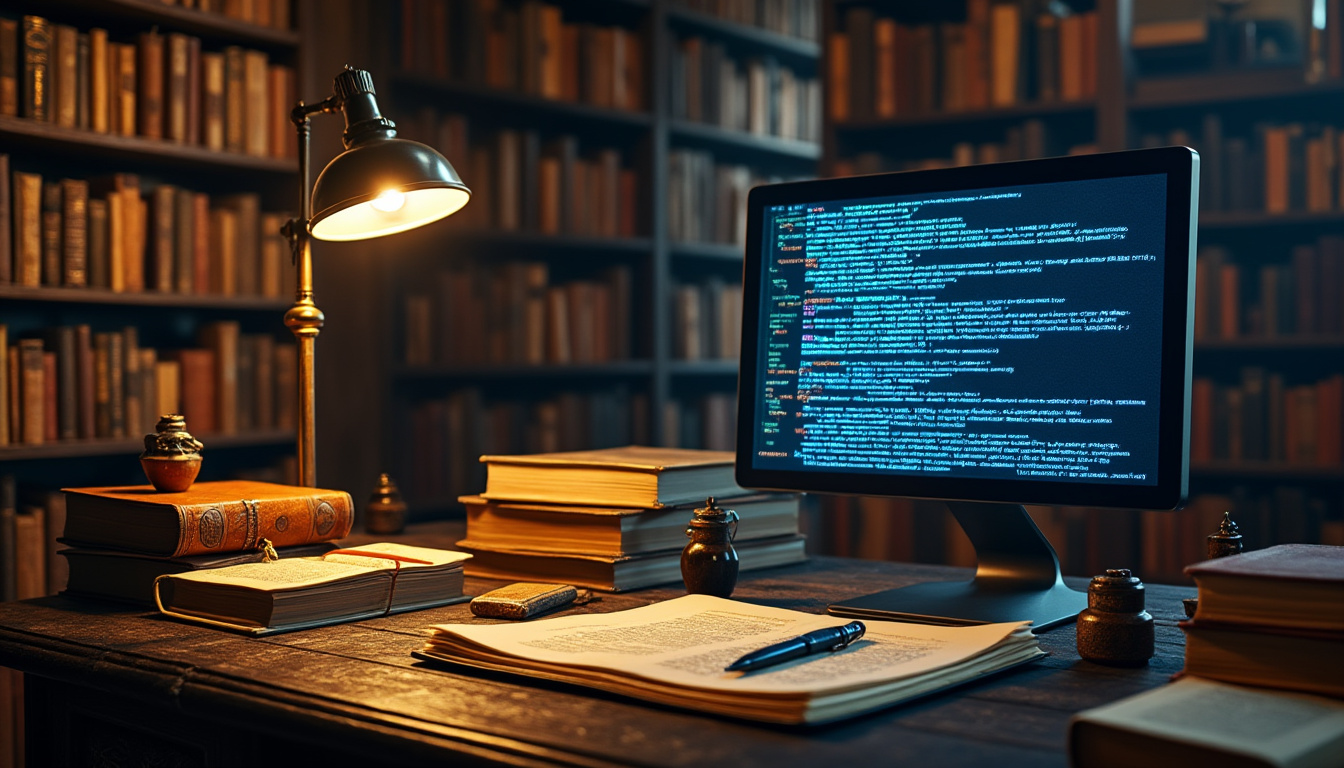
From Barthes to ChatGPT: The impact of generative AI on the notion of “death of the author”
At a time when technology is taking over our modes of creation a little more every day, the question of “author” is at the heart of lively debates. What does it mean to create in a world where artificial intelligence systems like ChatGPT can produce texts, images, even music by imitating styles without apparent originality? Taking Roland Barthes’s thoughts on the “death of the author” as a starting point, this article explores how the era of generative AI is redefining our understanding of art and creation.
The death of the author in the age of AI: a modern paradox
For a long time, the figure of the author has been called into question by the evolution of technologies. This questioning finds its origins in the writings of Barthes who, in his famous essay, argues that the text is a set of varied writings, a web woven of references and quotations. This idea echoes contemporary challenges posed by generative AI, which uses algorithms to create content based on countless existing works. So what does it mean to be a creator outside the constraints of a unique personality?
In 2025, as the capabilities of artificial intelligence continue to evolve, questions arise, both legally and ethically. One of the major concerns concerns intellectual property and copyright. Who should be recognized as an author in a context where a machine produces work that imitates the style of Stephen King or Van Gogh? Does the machine become a kind of “creator” in itself?
The legal implications of generative AI
The increasing integration of generative AI into the creative process poses numerous challenges to the current legal framework. Traditionally, the Society of Dramatic Authors and Composers and other institutions protect the rights of original creators. However, with AI claiming to generate content based on data models, the very definition of “author” is being undermined.
- Usage rights: AI-generated works raise copyright questions. If an AI produces a derivative work, who owns it?
- Financial rewards: Do the creators whose work was used to train the AI receive a share of the profits from the resulting works?
- Compensation models: The question arises as to whether training data should be compensated. Institutions such as Gallimard or Éditions de l’Automne face a dilemma.
Contrary to expectations, the impact of AI could redefine the concept of art itself. It is not uncommon for works considered masterpieces to be the result of collective inspiration. AI, in a way, echoes this tradition by cultivating a form of collaborative creation, but without true authority.
Creating Together: Art in the Collaborative Age
A fascinating aspect of AI in the creative field is its ability to evoke a new notion of collaboration. Paradoxically, as machines become involved, one could say that human interaction takes on a new form. Far from replacing artists, AIs are becoming tools that expand the range of possibilities. Platforms like Babelio and Librairie La Hune are beginning to explore these new interactions.
Here are some examples of interesting initiatives:
- AI-Assisted Writing Workshops: Writers collaborate with AIs to co-create stories, adding an innovative dimension to the storytelling process.
- Collaborative Art Projects: Artists can merge their ideas with those generated by algorithms, creating new genres of work.
- Generative Music: Musicians experiment with software that composes melodies based on classical or modern styles.
In 2025, this notion of “authorship” as collaboration becomes increasingly relevant. The shared inspirations between humans and machines highlight the blurring of traditional boundaries between the human and the technological.
Philosophical Reflections on Art and Creativity
This leads us to reflect on the very function of art. In his 1926 essay, Paul Valéry proposed that major innovations are transforming our relationship with art. Today, AI seems to be catalyzing such a transformation, pushing artists to redefine themselves in the face of tools of unprecedented power. The Socio-Cultural Impact of AI on Artistic Creation
As AI takes a prominent place in artistic creation, it is vital to reflect on its impact on our culture. Can creations resulting from AI systems embody a cultural heritage? How do these works fit into centuries-old artistic traditions? In this sense, institutions such as the French Institute of AI must consider the long-term implications.
AspectPositive Impact Negative Impact
| Accessibility | AI tools can help emerging creators express themselves. | Risks of a downward race for creations. |
|---|---|---|
| Origin | Mixed artistic influences. | Erosion of the authenticity of works. |
| Economy | Increased opportunities for inter-artistic collaboration. | Possibility of impoverishing the market for traditional creators. |
| In this dynamic, the question of the value of art is fundamental. How can we appreciate a work produced by a machine? This questioning extends beyond art to touch on philosophy itself: what does “creation” mean when the machine imitates and appropriates pre-existing styles? | Reinventing Art through AI: A Perspective for the Future | As the challenges of AI and artistic creation loom on the horizon, it is essential to see beyond traditional antagonisms. The *death of the author*, evoked by Barthes, could well be a rebirth of a new paradigm where, instead of seeing AI as a threat, we embrace it as a companion in creative exploration. |
New training programs, programs at the École Normale Supérieure, and mentoring initiatives are encouraging the younger generation to understand and work with these technologies. It’s no longer just about “creating,” but about co-creating, shaping a future where humans and machines help each other, reimagining the very idea of art.
Let’s examine some possible directions:
Education:
Incorporating AI courses into art school curricula to familiarize students with these technologies.Merging Disciplines: Collaboration between writers, visual artists, and technicians to encourage interdisciplinary work.
Building Communities:
- Forming groups where creators can test and explore these new technologies together. The future looks exciting. As we enter this explosive era of creation, we will undoubtedly discover new ways to interact with art, redefining what creation truly is. It is up to today’s artists and thinkers to forge this new reality, ensuring that it transcends mere imitation to embrace innovation.
Catégories : Non classé
Tags :