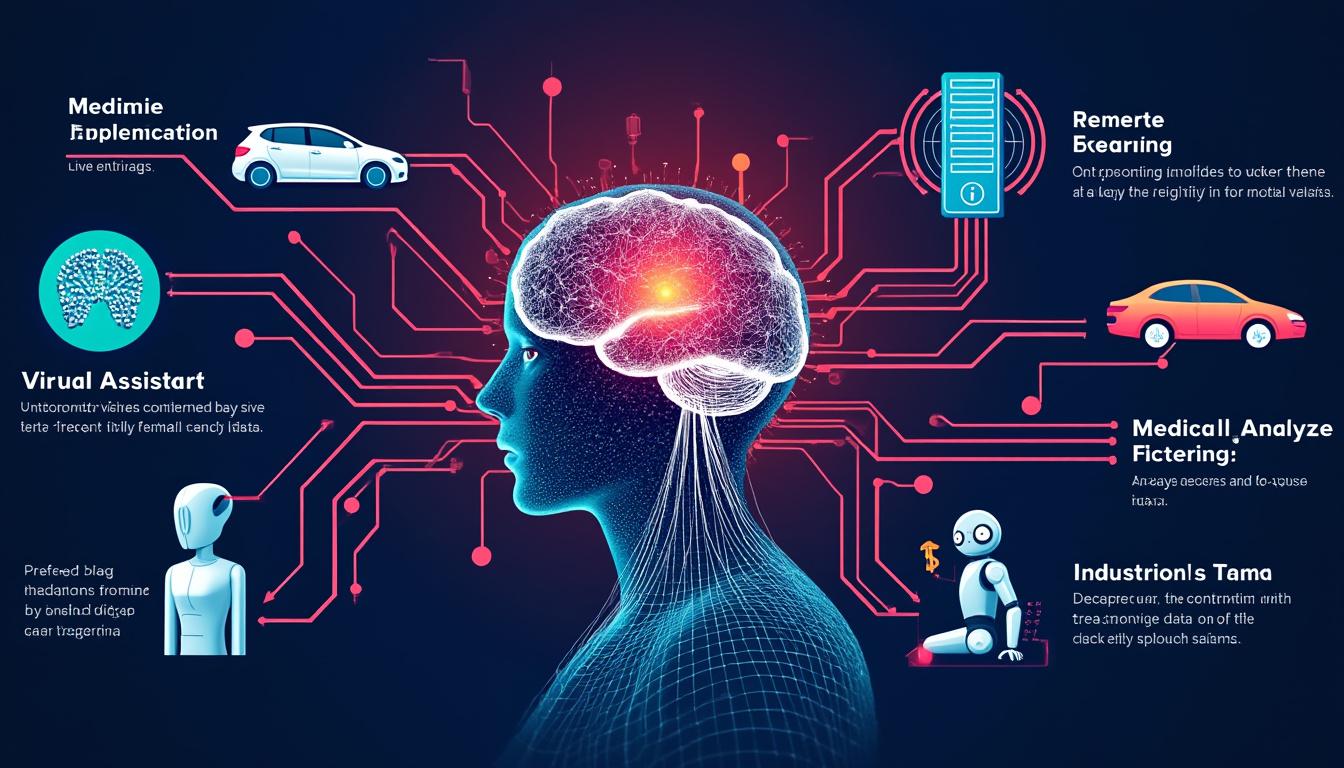
How does artificial intelligence work? Explanations and use cases
Artificial intelligence (AI) is now omnipresent in our daily lives. Between digital tools that make our daily lives easier and technological advances that are transforming industries, it is essential to understand how this revolutionary technology works. This article aims to explore the underlying mechanisms of AI while highlighting practical examples from various sectors, ranging from healthcare to industrial automation.
What is artificial intelligence and how does it work?
Artificial intelligence refers to all technologies capable of simulating human intelligence, notably through machine learning, algorithms, and large databases. Developed by pioneers such as John McCarthy and Marvin Minsky in the 1950s, AI today is based on various fundamental principles.
Key Components of AI
For a machine to be considered artificially intelligent, it must integrate essential elements:
- Algorithms: Precise instructions that allow machines to solve problems. Big Data:
- The exploitation of vast data sets to recognize patterns and improve results. Computing Infrastructure:
- High-performance systems and hardware are required to process this data quickly. Artificial Intelligence Processes
AI relies on several learning methods that contribute to its ability to improve its performance over time:
Supervised Learning:
- Training a model from labeled data, allowing the AI to learn to recognize objects or patterns. Unsupervised Learning:
- Analysis of data without labels, where the AI discovers patterns and groupings on its own. Reinforcement Learning:
- AI learns to make decisions by receiving rewards or penalties based on its actions. These processes are the foundation of a machine that can learn, predict, and adapt to new environments. For example, companies like Google and IBM are using these advanced techniques to develop innovative applications.
Concrete Applications of Artificial Intelligence AI has established itself in several sectors, providing solutions that improve efficiency and productivity. Let’s explore some notable use cases. 1. Use of AI in the Healthcare Sector In the medical field, artificial intelligence is revolutionizing practices by improving diagnoses and treatments. AI algorithms such as those developed by DataRobot analyze medical images to accurately detect diseases. For example: Early Cancer Diagnosis:
Analysis of ultrasounds and MRIs to identify abnormalities.
Treatment Optimization:
Personalization of treatment methods based on patients’ genetic data. Remote Monitoring: Using AI to monitor patients’ health at home through connected devices.
2. Artificial Intelligence in Industry In the industrial sector, AI is essential for automating and optimizing manufacturing processes. Siemens and Nokia are using AI to:
- Automate production lines: Reduce costs and increase productivity through intelligent robots.
- Predict breakdowns: Use algorithms to predict and prevent equipment failures.
- Logistics optimization: Improve supply chains through real-time data analysis.
Application
Impact Medical diagnosis Early anomaly detection Industrial automation Improve productivity
- Customer service Reducing Response Times
- The Future of Artificial Intelligence As artificial intelligence continues to evolve, its integration into all sectors seems inevitable. Technology companies like Microsoft and OpenAI are investing heavily in this technology to make it accessible to the general public.
- AI Trends to Watch in 2025 Looking ahead to 2025, several major trends are emerging in the AI landscape:
| Ethics and Regulation: | Governments and businesses will need to develop ethical frameworks to regulate the use of AI. |
|---|---|
| Increased Personalization: | Marketing tools will use advanced algorithms to offer tailored services. |
| Connected Intelligence: | Increasing integration of AI with the Internet of Things (IoT) to optimize smart homes and connected cities. |
| Impact on Employment and Skills Needs | With the rise of artificial intelligence, a question arises: how will AI influence the job market? Jobs will be created, but others could disappear. Therefore, it is essential to prepare for this transformation. |
SAP
and other management software developers already provide resources to help employees acquire AI skills, making them assets in a changing world. Conclusion In a world where artificial intelligence is increasingly prevalent, it is crucial to understand its mechanisms and implications. From healthcare to manufacturing, this technology is transforming our lives while posing ethical and societal challenges. By maintaining a balance between innovation and responsibility, we can maximize the benefits of artificial intelligence.
Catégories : Non classé
Tags :