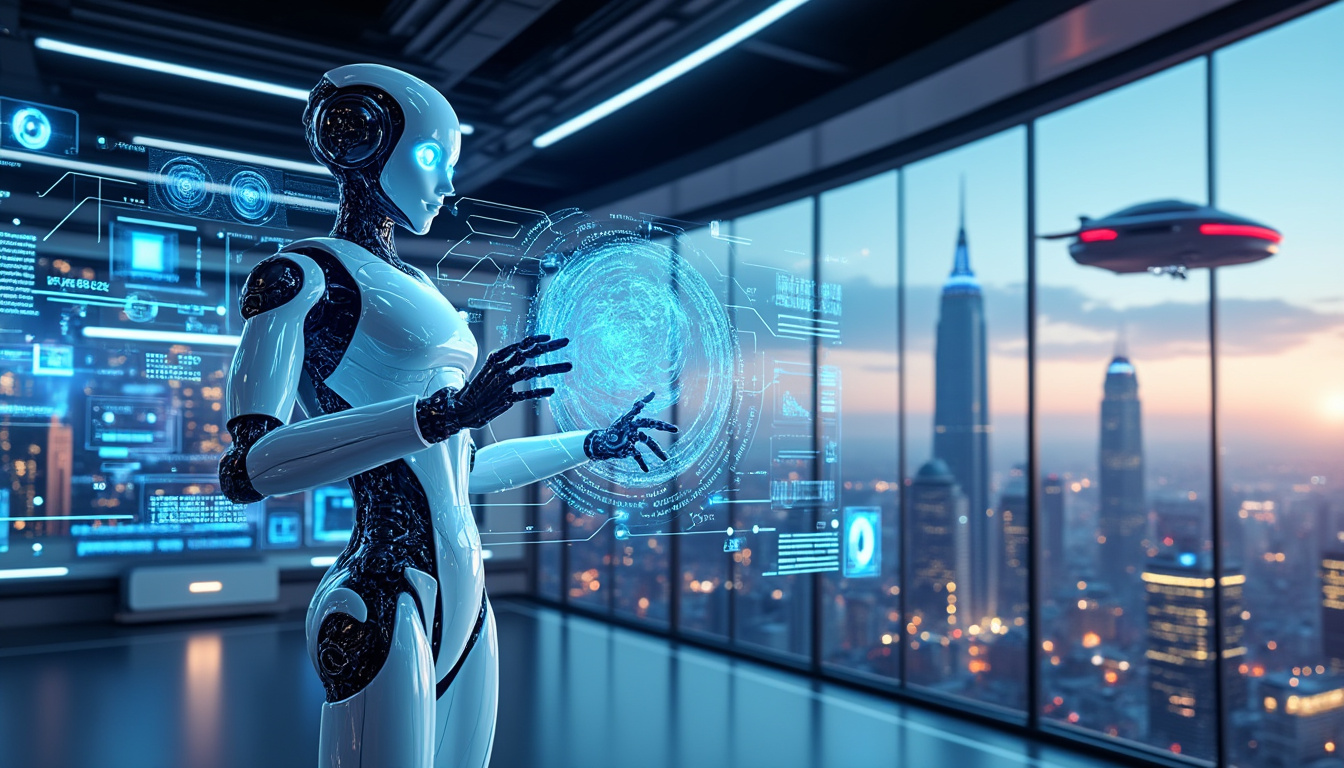
Manus AI: a major breakthrough for autonomous artificial intelligence agents
In a world where artificial intelligence (AI) is redefining the boundaries of technology, one player stands out for its unique capabilities and autonomy: Manus, the first fully autonomous general AI agent. Developed by the Chinese startup Monica, this system marks a turning point in how humans can interact and collaborate with artificial entities. As competition intensifies, with giants like OpenAI, IBM Watson, and NVIDIA, Manus promises to elevate human-machine interactions to a new level, raising both hopes and questions. This article examines the technical specifics of Manus, its potential applications, and the ethical and societal issues it raises. Manus: The Origin of an Innovative Artificial Intelligence AgentManus, whose Latin name means “hand,” emerged from the mind of Monica, a startup based in Shenzhen, China. With the support of a particularly dynamic technology ecosystem, Monica was born to develop AI agents designed to operate autonomously, going beyond traditional voice assistants or chatbots. The launch of an AI assistant under the same name in 2023 laid the foundation for this development. It quickly gained popularity, attracting more than 10 million users by 2024. Manus was unveiled to the world on March 6, 2025, marking a major shift towards a fully-fledged artificial intelligence agent. This shift from a conversational assistant to an agent capable of autonomously performing complex tasks underscores the profound innovation that characterizes Monica’s approach. Ecosystem and Collaborations Monica has successfully leveraged a global innovation framework, collaborating with cutting-edge language models such as Hugging Face’s LLM models and Alibaba’s solutions.. These partnerships help strengthen Manus’ technology and make it more efficient against competitors such as OpenAI and
C3.ai
. As global competition for AI intensifies, events like the success of DeepSeekin 2023 have been compared to “Sputnik moments” for Chinese AI, and Manus represents another decisive step in that race.
Why the autonomy of Manus is fundamental
Manus’ main distinction lies in its ability to function autonomously. Unlike chatbots that require detailed instructions for each step, Manus is able to analyze a problem, plan and execute solutions without continuous human intervention. This paves the way for increasingly complex applications, improving process efficiency in various areas.
Year Major event Context 2023 Launch of Monica AssistantMore than 10 million users2024 DeepSeek success storyStrengthening Chinese AI on the global stage 2025 Unveiling of Manus
Evolution towards an autonomous general AI agent
The technical specifications of Manus
| Manus is designed on a multi-agent architecture, unique compared to traditional models which rely on a single language model. This configuration allows Manus to coordinate a team of sub-agents, each specialized in a specific task. For example, one subagent could be dedicated to planning, another to knowledge retrieval, and a third to code generation. | Integration of language models and external tools | Manus relies on advanced language models, like |
|---|---|---|
| Claudius 3.5 | of | Anthropic |
| and optimized versions of open-source models | Alibaba | This system not only enables efficient interpretation of natural language instructions, but also relies on deterministic scripts to ensure reliability when executing critical tasks. External tools, such as APIs for accessing financial or weather data, and a secure code execution environment, further enhance its capabilities. |
| Autonomy and Security | Manus operates in a Linux sandbox environment, ensuring that its execution procedures remain secure and isolated. This technology reduces the risk of unauthorized access while allowing Manus to perform concurrent operations. Manus’s structured agent loop—analysis, planning, execution, and observation—allows it to progress iteratively, improve its results at each step, and react quickly to contextual changes. | Applications of Manus in Various Domains |
Manus’s capabilities span several domains, from recruitment to financial analysis. Its versatility makes it a valuable tool for businesses and individuals looking to improve their efficiency. Here are some of Manus’ key applications:
Recruitment:
Resume analysis and extraction of relevant skills.
Financial Analysis: Performing stock market analyses and generating interactive reports. Real Estate Search:Personalizing property recommendations based on needs. Content Creation:Developing interactive courses and video presentations.Task Automation:
Social media management and participation in AI competitions.
Field Specific Applications Tools Used
Recruitment
Resume analysis, ranking report
- Data APIs Financial Analysis
- Stock market correlation, interactive reports Python, financial APIs
- Real Estate Search Personalized Recommendations
- Data Analysis Content Creation
- Travel Itineraries, Interactive Courses LLM Templates
| Task Automation | SEO Audits, Social Media Management | Programming Tools |
|---|---|---|
| Challenges and Limitations of Manus | Despite its impressive capabilities, Manus does not face significant challenges. Several users have reported stability issues, crashes, and recurring errors that require human intervention. Furthermore, concerns remain about hallucinations, where the agent could generate inaccurate information. Manus’s current availability is limited to a private beta, raising questions about user access and expectations. | Ethical Issues Related to AI Autonomy |
| The implications of Manus’s autonomy are vast, raising ethical concerns. What is the liability in the event of AI-generated errors? What protections are in place for personal data processed by AI systems? Given Monica’s potential ties to the Chinese government, data security issues become paramount. At the same time, the development of autonomous agents imposes an urgent need for clear regulations to prevent the misuse of these technologies. | Societal Impacts and Potential Future | The development of Manus could have a significant impact on the job market. By replacing certain human tasks, particularly in the areas of recruitment or data analysis, Manus could create a new work paradigm, but also generate fears of mass automation. How can we ensure a fair transition for the workers concerned? What role will governments and businesses play in this process? |
| Challenge | Implication | Response Strategies |
| System Stability | Frequent Crashes and Errors | Human Intervention Required |
| Hallucinations | Inaccurate Data Generated | Algorithm Updates |
Limited Access
Explosive Demand for Access Warning the Need for a Solution Reliance on Existing Models
Lack of Originality
Internal Research and Development
Ethical Issues
Questions about Liability and Security
| Regulatory Development | As the technological world continues to evolve, Manus is emerging as a key player to watch. The widespread adoption of its intelligence could transform many sectors, but it will require careful attention to ethical and societal challenges to ensure that this technology is used responsibly and beneficially for all. | In sum, Manus’s impact on artificial general intelligence and its relationship to technological and economic innovation promises to redefine our understanding of AI in the years to come. The implications of this development challenge us about how our society chooses to integrate these powerful tools into our daily lives. Will we be ready to embrace these changes, or will we resist this transformation? |
|---|---|---|
Catégories : Non classé
Tags : artificial intelligence, autonomous agents, innovation, manus ai, technological advancement