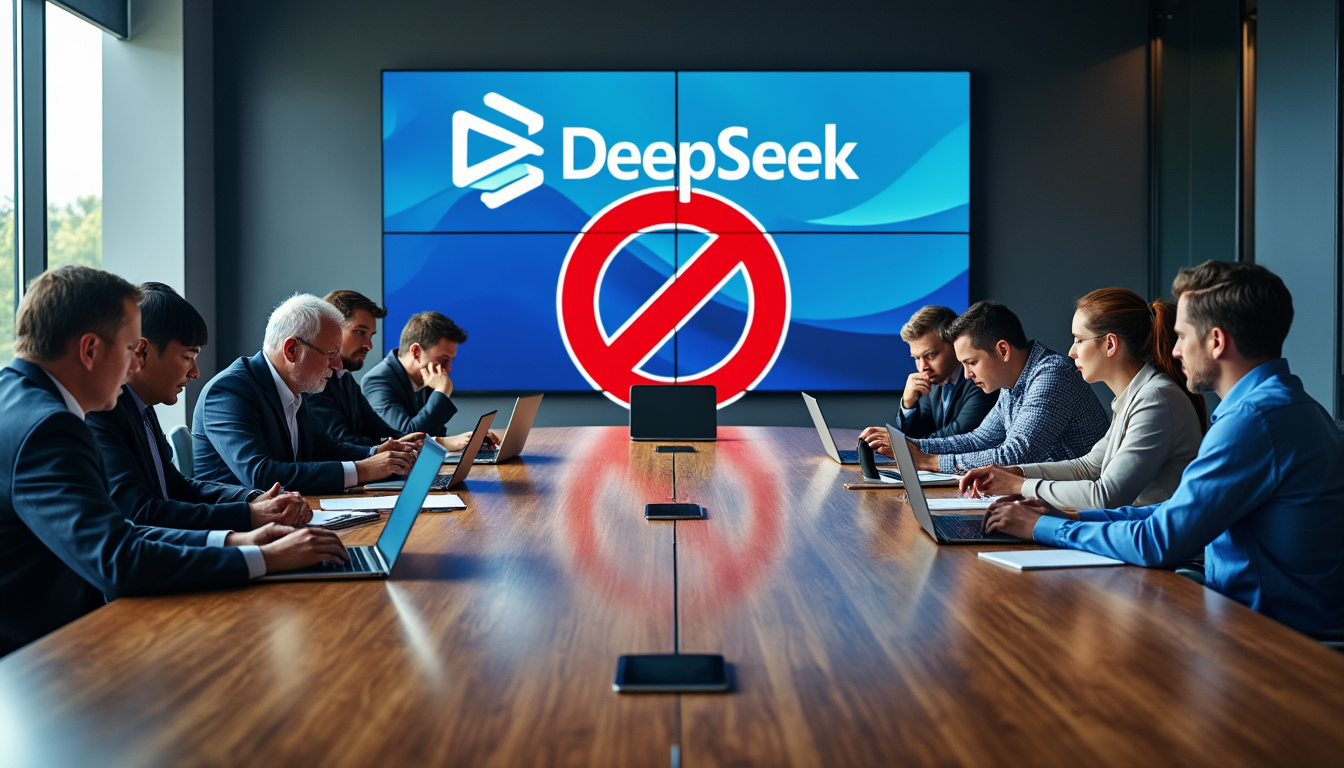
Microsoft imposes ban on DeepSeek use for its employees
In a rapidly changing technological landscape, digital giants often find themselves facing difficult choices, balancing innovation and security. Microsoft, a key player in the industry, recently strengthened its internal policies by prohibiting its employees from using DeepSeek, a Chinese generative artificial intelligence (AI). This decision, motivated by growing concerns about data privacy and the potential influence of propaganda, reveals the geopolitical tensions that could shape the future of technology. Deeply rooted in a struggle for innovation, this case raises questions about the implications of using foreign tools in the workplace.
Microsoft vs. DeepSeek: A Strategic Turning Point
Since its launch last January, DeepSeek has positioned itself as a serious competitor in the field of artificial intelligence, rivaling players such as OpenAI. This software, while innovative, has raised a multitude of concerns regarding peace of mind and privacy, particularly in the United States. During a recent Senate hearing, Microsoft President Brad Smith announced a categorical ban on DeepSeek, both for its employees and for its use in work environments. Motivations behind the ban Microsoft’s reluctance toward DeepSeek is based on a variety of reasons, ranging from concerns about data security to the potential impact on productivity. of its employees. Furthermore, Brad Smith points out that data shared with DeepSeek may be stored on servers based in China, which poses a risk of sensitive information leakage, particularly given DeepSeek’s commitment to collecting user data. This collection allows for continuous enrichment of the model at the expense of confidentiality. Propaganda Risks: The fear that the responses generated by DeepSeek may be influenced by political directives.
Data Security: The possibility that confidential employee information could be compromised.
Reputational Impact: The risk of being associated with technologies potentially controlled by the Chinese state. The Defining Line: Internal Use vs. Cloud Technology Despite this ban, Microsoft continues to offer the DeepSeek-R1 model on its Azure platform, allowing access to its AI model while remaining under US control. This dichotomy underscores a cautious policy: while access to the application is restricted for employees, using the model as software hosted on local servers offers a more secure alternative. Here are some notable differences: Criteria Using the DeepSeek application DeepSeek-R1 model on AzureData confidentiality
- High risk of leaks More secure, data under control
- Accessibility for employees Prohibited
- Allowed for developers
Influence of propaganda
Possible influence on responses Modified by Microsoft to limit biasGovernment reaction and international implications Microsoft’s concerns are also reflected within the U.S. government and its allies, who are closely scrutinizing the security impact of DeepSeek This vigilance is manifested by increased regulation and a growing demand to adhere to strict security criteria in the use of foreign technologies. Notably, the Trump administration is even considering criminalizing the use of tools like DeepSeek within government agencies, thus taking restrictive measures to limit the exposure of sensitive data. Other countries such as Australia and South Korea have also taken restrictive measures. The Geopolitical Stakes of Technology In an increasingly connected world, tensions between the United States and China are palpable, where every technological advance becomes a tool of power. The conflict is not limited to economic issues; it also extends to cultural and social concerns.
| Technological Innovation | : Both countries aspire to lead, but this consumes significant resources. | Technology Diffusion |
|---|---|---|
| : China’s expansion strategy in other countries with tools like DeepSeek is a cause for concern. Technology Reputation: The United States seeks to position itself as a model for reliable technology. | International Relations Affected by the Ban Regulatory actions in response to DeepSeek are having repercussions beyond U.S. borders. Foreign governments’ perceptions of Chinese technologies are beginning to change, fostering growing distrust. Discussions around the regulation of AI and emerging technologies will become a central focus of international dialogue in the coming years. | CountriesActions Against DeepSeek |
| United States | Ban on Government Employees | South Korea Exclusion from App Stores |
| Australia | Ban on Government Systems Future Outlook for Artificial Intelligence | Developments Around DeepSeek |
and Microsoft’s policies point to a complex path for the future of artificial intelligence. While concerns remain about security and privacy, ethical debates about the impact of AI and related technologies are inevitable. The issue of regulation surrounding these technologies will continue to fuel discussions among industry stakeholders, governments, and consumers.
Implications for Business Businesses must navigate this rapidly evolving landscape carefully. The rise of AI tools, such as DeepSeek, could transform the way people work, but it must be accompanied by a strong awareness of data security. For business leaders, this translates into several responsibilities: Raising awareness of the risks inherent in using foreign AI Prioritizing data security in digital strategy Supporting employees in learning and using technologies responsibly Toward ethical regulation of artificial intelligence Internationally, the balance between innovation and regulation will increasingly emerge as a major issue. Companies will have to be transparent in their technological choices and take responsible initiatives in the face of the threat of mishaps: protecting user privacy could well be the key to a sustainable future of technology.
As we move toward a digital future, vigilance regarding the use of artificial intelligence and consideration of the societal implications of technologies will be more essential than ever. The rapid evolution of technologies requires us to keep a close eye on advances while emphasizing peace of mind and security in the professional world.
Catégories : News & AI
Tags : deepseek, employees, microsoft, prohibition, technology