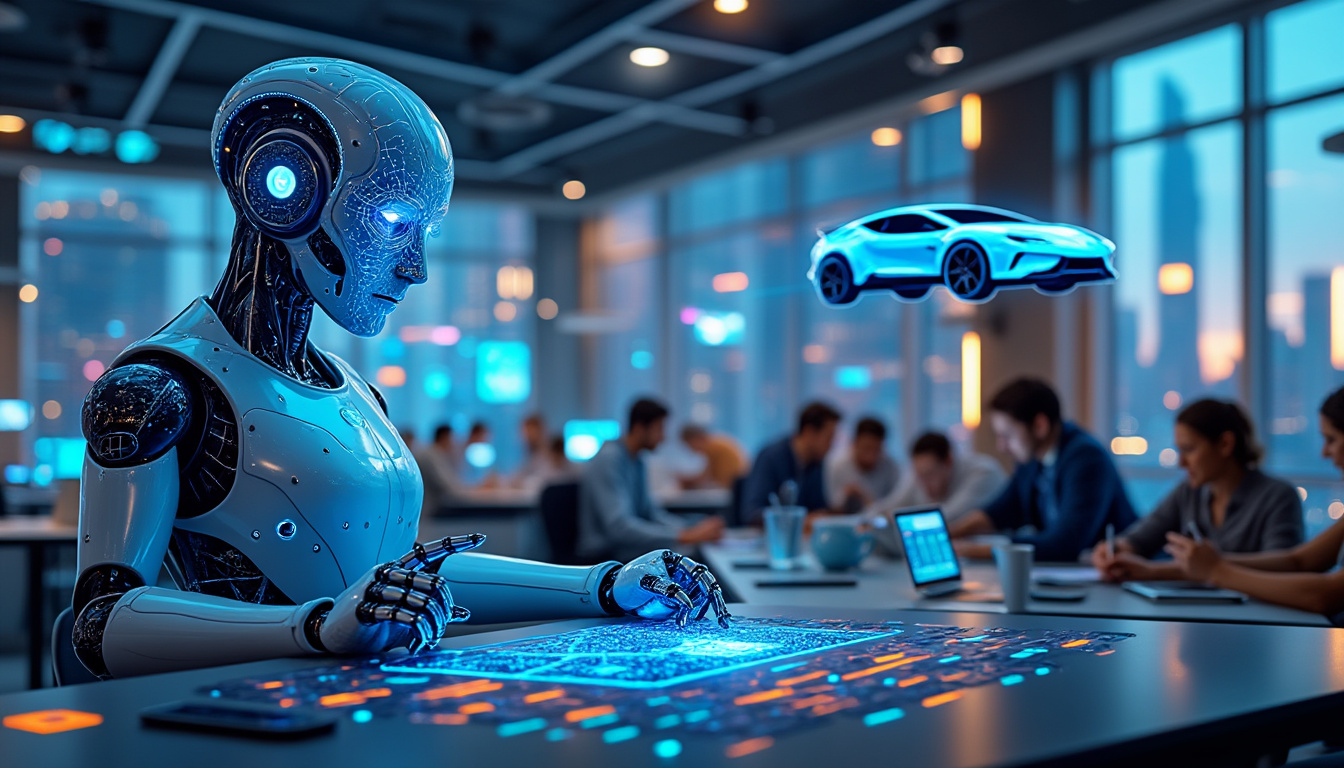
Réouven Bokobza of limova.ai: autonomous AI assistants at the service of innovation
At the dawn of a digital age where innovation is the key to success, companies like Limova are positioning themselves at the crossroads between technology and autonomy. Réouven Bokobza, head of this startup, is deploying a bold vision for autonomous artificial intelligence (AI) assistants. These tools promise not only to optimize productivity but also to revolutionize our daily lives. So, how is this technology evolving and what impact could it have on the entrepreneurial landscape of 2025? Let’s explore the potential of autonomous assistants in the age of innovation. Autonomous AI Assistants: A Necessary Definition To grasp the full scope of autonomous AI assistants, it’s important to define their scope. These intelligent tools are capable of performing tasks without constant human intervention, using advanced algorithms to adapt and learn new procedures. By 2025, this technology has become indispensable in various sectors, including customer service, marketing, and even human resources management.
Characteristics of Autonomous AI Assistants
Autonomous assistants are distinguished by several key characteristics:
Autonomy
: They are able to perform tasks without supervision, freeing up time for human employees.
- Adaptive Intelligence : Thanks to machine learning algorithms, these assistants adjust to the user’s needs.
- Multi-platform Integration : They are designed to interact with various digital tools, improving process efficiency.
- Customization : Each assistant can be configured to meet a company’s specific needs.
- The Challenges of Autonomy in Service As companies adopt this technology, several issues arise:
Ethics: What is the role of human workers?
Decision-making process: Can we trust AI to make critical decisions?
- Cost: Is investing in this technology always profitable?
- Trust: How can we ensure user data is protected?
- Features
- Impact on the business
| Autonomy | Freeing up human resources |
|---|---|
| Adaptive intelligence | Improved task efficiency |
| Cross-platform integration | Process optimization |
| Personalization | Meeting specific needs |
| Réouven Bokobza and Limova: an innovative vision | At the heart of |
Limova
, Réouven Bokobza embodies a new generation of entrepreneurs who believe in the power of innovation to transform our daily lives. His approach is to create autonomous AI assistants that not only assist with daily tasks but also improve users’ quality of life. Concrete Applications of Limova’s Assistants The applications of Limova’s assistants are vast, covering various areas such as:Customer Service
: Respond quickly to customer requests, rather than waiting for a human agent to intervene.
Task Management
- : Organize schedules and anticipate employee needs. Data Analysis
- : Extract relevant insights in real time for better decision-making. Targeted Marketing
- : Personalize campaigns based on user preferences. AI Market Challenges in 2025
- While innovation is at the heart of Limova’s mission, several challenges remain relevant in the AI assistant sector: Accessibility: Startups must find ways to make these technologies accessible to companies of all sizes.
User Education: Training employees to effectively use these new tools is essential.
Regulation: Navigating a constantly evolving legal landscape is a challenge for entrepreneurs.
- Application
- Impact
- Customer Service
| Instant response, increased customer satisfaction | Task management |
|---|---|
| Improved productivity | Data analysis |
| Informed decisions based on up-to-date data | Targeted marketing |
| Increased return on investment (ROI) | The future of autonomous AI assistants in the digital economy |
| By 2025, the economic landscape has already been profoundly impacted by the rise of digital technologies. Autonomous AI assistants, like those developed by Limova, are emerging as essential allies for businesses. But what does the future hold for these tools? | Emerging trends in AI |
Technology is evolving rapidly, and several trends are emerging for the future of autonomous assistants:
Emotional AI : Assistants’ ability to understand and respond to human emotions to provide more personalized service.Human-machine collaboration
: The focus will be on seamless interaction between assistants and employees. On-demand technology:
Users can expect immediate accessibility at their fingertips.
- Security awareness: Data protection will be a non-negotiable priority.
- Business adaptation to new technologies: Businesses must constantly adapt to take advantage of industry innovations. This requires a flexible mindset and strategic investments:
- Investing in training teams to ensure they take ownership of these tools. Creating synergies between technologies to maximize productivity.
- Measuring the impact of AI tools on organizational and physical performance. Trend
Market impact
Emotional AI
- More human and personalized interactions
- Human-machine collaboration
- Increased productivity through synergy
| On-demand technology | Immediate accessibility of tools |
|---|---|
| Security awareness | Increased user confidence |
| Ultimately, the advent of autonomous AI assistants like those offered by Limova is only just beginning. With bold entrepreneurs like Réouven Bokobza leading this innovation race, it’s clear that the future of AI is both promising and challenging. Businesses must not only educate themselves on these new technologies but also actively engage in their adoption to avoid being left behind in the digital age. | |
Catégories : Non classé
Tags :