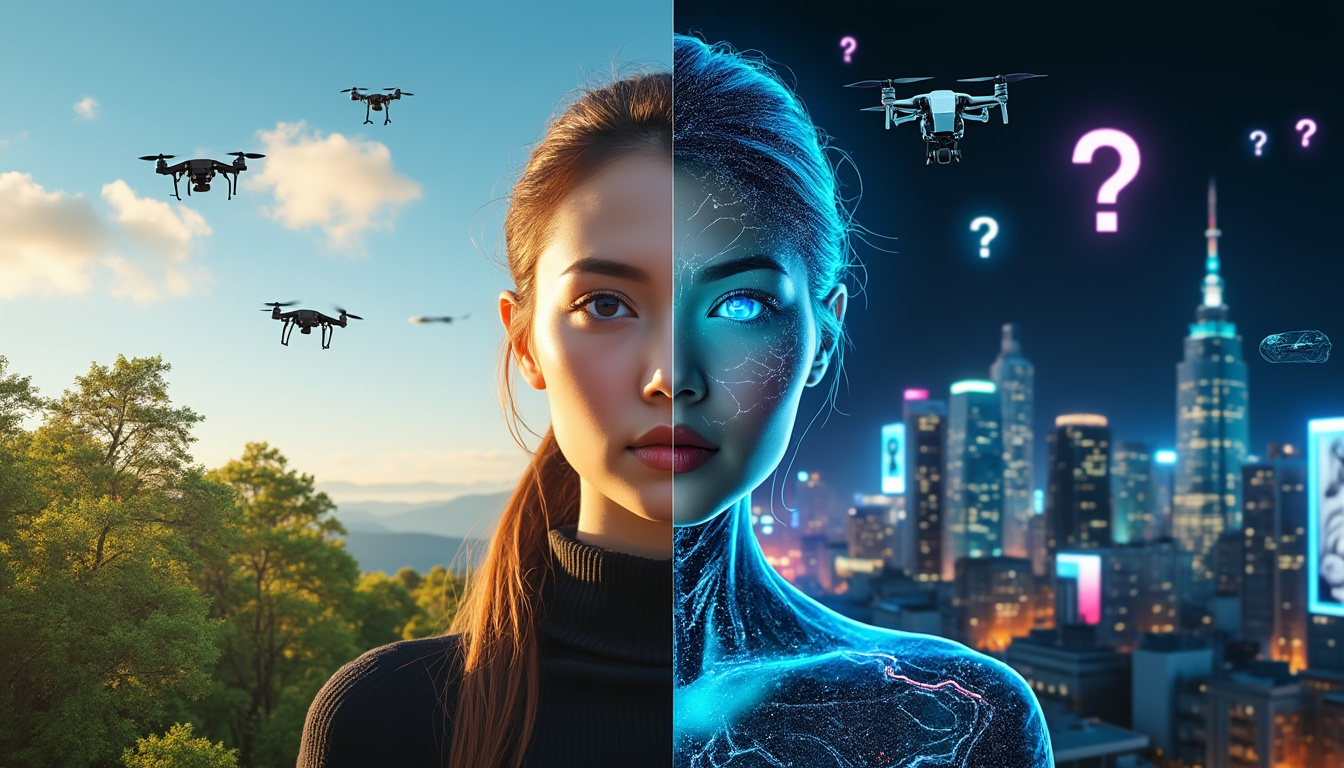
Should We Be Afraid of Artificial Intelligence? Deciphering Preconceived Ideas
Technological advances, particularly in the field of artificial intelligence (AI), raise crucial questions for the future of humanity. Perceptions of AI vary considerably: some elevate it to the status of a miracle solution, while others associate it with existential threats. Why this duality? How can we navigate these murky waters? Let’s explore the implications of these technologies on our daily lives.
Today, nearly 60% of the French population believes in at least one conspiracy theory, often fueled by fears about AI. This phenomenon deserves special attention, as combating this misinformation could well involve using digital tools, such as chatbots, to correct misconceptions. Let’s analyze the most common fears while suggesting avenues for informed and constructive dialogue around AI.
Understanding the Fear of Artificial Intelligence
Perceptions of AI are sometimes tinged with mistrust. Three major fears emerge in this discussion: the fear of a loss of control, the risks of job elimination, and the ethical biases that these technologies could generate.
Fear of Loss of Control
One of the main fears is linked to the idea that machines, if they become too autonomous, could act unpredictably. The future depicted in some science fiction films fuels this anxiety. However, these concerns must be tempered by the reality of AI research. Researchers make a point of ensuring that technologies remain under our control. But then, what happens in reality?
Impact on Employment
Advances in automation and artificial intelligence are fueling a heated debate in the job market. Should we fear that thousands of workers will become obsolete? This seems like a legitimate concern. At the same time, other voices are pointing out that AI is also creating new positions, particularly in management, ethics, and maintenance of AI systems. What balance should be struck?
Ethical Issues and Bias
It is crucial to consider the biases these systems can transmit. Recent history has shown that algorithms can amplify existing prejudices, especially in areas such as recruitment or facial recognition. This raises ethical questions about the responsibility of companies developing these technologies.
Conspiracy Theories and AI
Conspiracy theories are not limited to political or economic actions; AI is also often the target of them. Around 60% of French people believe in at least one conspiracy theory. Why such support? A salient aspect is the search for truth within a group that feels a certain distrust of the rest of society.
Origins of Distrust
Between resentment towards institutions and a search for meaning, people who believe in conspiracy theories often see themselves as experts in fields where they feel underrepresented. Could chatbots play a role in deflecting these ideas? Research shows they can reframe opinions without judgment or pressure, which is essential.
Chatbots to enlighten minds
Thomas Costello’s experiment revealed a promising approach. The results show that by interacting with a chatbot, participants discover corrected and contextualized information. The method reduced support for conspiracy theories by nearly 20% after a single discussion. This raises a pertinent question: how can this method be extended to other areas where disinformation thrives?
Ethics and Regulation of AI
In a world where AI is ubiquitous, it is becoming vital to infuse it with an ethical dimension. Calls are growing for clear regulations to protect individuals and prevent potential abuses. But how can this balance between innovation and protection be achieved? This task falls largely to governments and regulatory bodies, but also to companies themselves.
National and International Regulations
Initiatives have emerged at the national level, particularly in France, with the creation of bodies dedicated to AI regulation. These bodies must collaborate internationally to harmonize efforts and avoid hindering innovation. But should these regulations be rigid or flexible to adapt to rapidly evolving technologies?
Towards education and awareness
At the same time, educating the general public about the implications of AI is essential. This helps demystify and clarify the issues, and potentially positively impact perceptions. Raising awareness of both the benefits and risks could reduce anxiety about AI.
The future of artificial intelligence
At the dawn of an era where AI plays an increasingly central role, let’s imagine the impact it could have in various fields such as healthcare, education, and beyond. It is imperative to consider what a society will look like, grappling with such powerful tools.
AI and Health
In the medical field, AI could transform the way care is delivered. Advanced analytical tools promise to detect diseases at early stages, thus revolutionizing prevention practices. The important thing here remains to ensure that these technologies are used ethically, ensuring the protection of patients’ personal data.
AI and Education
In education, AI offers the possibility of personalized learning, meeting the specific needs of each student. However, this also poses ethical challenges, particularly in terms of data protection. How can we maintain a balance between technology and humanity in learning? Understanding the Duality of Artificial Intelligence
Understanding the challenges associated with AI requires understanding its real impacts on society. Beyond fears, it is essential to view this technology as a tool from which we can make the most of it. Thinking about how to coexist with AI begins with dialogue and information.
For a Harmonious Society
A future where AI is integrated is not inevitable, but rather an opportunity for evolution. By integrating ethical and strategic reflexes into the development of these technologies, it is possible to design a society that improves quality of life while preserving the human element at the heart of the debate. This is a collective approach that requires everyone’s commitment.
Dialogue to Move Forward
Initiating dialogues around artificial intelligence can pave the way for innovative solutions. Collaboration between scientists, policymakers, and the general public is essential to building a peaceful future. This includes discussion spaces, public forums, and educational initiatives that allow for the sharing of knowledge and concerns about AI.
Catégories : Non classé
Tags :